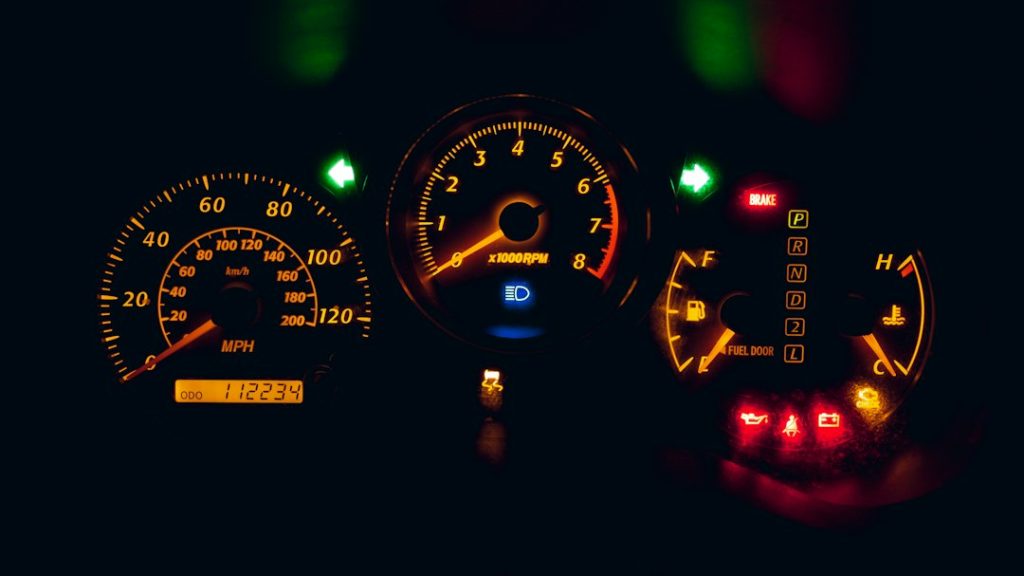
A modern car’s dashboard can display dozens of different warnings. Their precise meaning depends on the make and model, so a general colour rule is no substitute for the car’s own owner’s manual. “Let’s clear the fault code and see what happens” is not a good strategy for a vehicle inspection.
A warning light indicates a condition detected by a system
When a warning concerns the engine, brakes, airbags, tyre pressure, stability control or electric powertrain, you must also read the text on the display. The symbol may be familiar from another car, but you should check what to do in the owner’s manual for your own model. Some lights are part of the normal start-up test and go out after a short time; a persistent warning is a different matter.
A fault code is not always the same as the fault
A diagnostic code helps identify the system in which an abnormality has been detected. On its own, it does not tell you which part needs replacing. Professional fault diagnosis combines the code with measurements, symptoms and the manufacturer’s instructions.
How can a warning light affect the inspection?
During a vehicle inspection, different systems are assessed according to their own assessment criteria. There is therefore no single pass-or-fail rule for all dashboard lights. The engine emissions-related malfunction indicator (MI) light and the OBD system check are covered by Traficom’s exhaust emissions inspection instructions. Depending on the method applicable to the vehicle, a fault indication, incorrect operation of the light or a fault code specified in the regulation may result in a failed inspection.
The inspection may also include OBD system readiness monitor tests. A light that has gone out therefore does not, on its own, mean that all the requirements for the inspection are met. After a repair, the workshop should verify that the system operates in accordance with the vehicle manufacturer’s instructions.
Record your observations before visiting the workshop
- Which symbol and text message are displayed? If necessary, take a photo while the car is safely parked.
- Does the light come on when the ignition is switched on and go out after the vehicle starts, or does it stay on?
- Does the warning appear constantly or only in a particular situation, such as when the vehicle is cold or during acceleration?
- Do you also notice jerking, an unusual noise, reduced power or a change in the feel of the brakes?
- Has the car recently been serviced or repaired, and would it be useful to mention when this was done during fault diagnosis?
Record your observations as they happened. Do not replace a part solely on the basis of the same fault code found online, and do not cover up the warning light. It is best to arrange an inspection appointment only once the situation affecting safety has been investigated.
Do not continue driving as normal simply to get to the inspection. Check the vehicle’s owner’s manual to find out whether it is safe to drive or whether you need to stop.
Once the fault has been repaired
Ask the workshop to explain what fault was found, what was repaired and how the success of the repair was checked. Keep the explanation you receive. If the warning reappears before the inspection, tell the workshop instead of clearing the code again. A previous repair or a list of fault codes may help the investigation, but the inspection assesses the car’s condition at the time.
Traficom: Assessment criteria for periodic vehicle inspections, particularly section 3.4 and section C15.1 of the annex. Checked on 8.10.2026. The practical preparation advice has been compiled by the editorial team. Always check the meaning of an individual warning and the safe course of action in your own vehicle manufacturer’s owner’s manual.