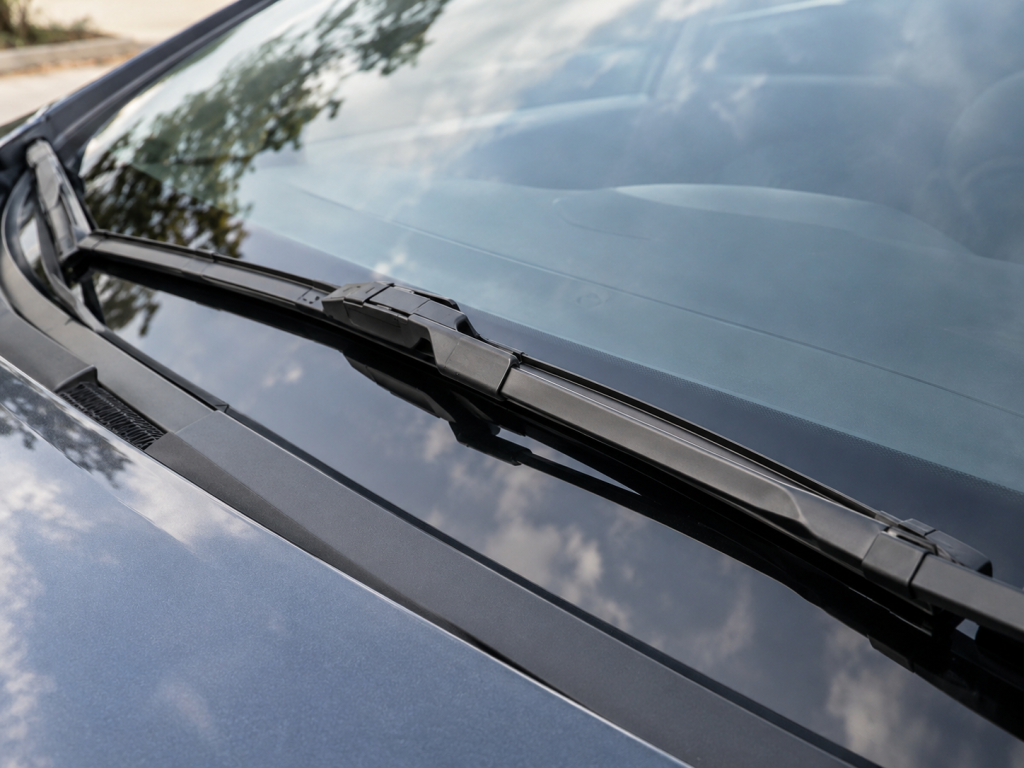
A film of dirt on the windscreen, a poorly performing wiper blade and an empty washer fluid reservoir can together make driving difficult on dark autumn days. It is worth doing a quick visibility check while the car is stationary, before setting off. This guide takes you through the glass, washer system, wipers and demisting, and helps you distinguish between something that needs cleaning and a fault that needs a professional assessment. Five minutes is a framework for the check; thawing, cleaning and repairs may take longer.
Start safely, with the car stationary
Park somewhere you can check the car without rushing or disturbing others. Switch on the functions you need as instructed in the vehicle handbook. If the engine needs to be running, carry out the check outdoors. Do not run a combustion engine in an enclosed garage. Keep your hands and tools away from moving wipers.
Remove ice and snow before testing the wipers. Do not use the wiper motor to force blades free if they are frozen to the glass. If you lift the wiper arms for cleaning, check the vehicle instructions first: on some cars, the arms must be moved to a separate service position. Support each arm so that it cannot snap back against the glass.
The first minute: look at the glass from the driver’s seat
Sit in your normal driving position. Check the inside and outside of the windscreen and the area through which you look at traffic. Can you see a greasy film, cleaning marks, stickers or objects that obstruct your view? Dirt on the inside can go unnoticed when you wash the outside. Clean the glass with a suitable product, following the product instructions, and use a clean cloth.
Also look through the side windows and check the mirrors. Make sure that a load, a phone holder or a hanging object does not block the view you need. The aim is to spot anything affecting visibility from your driving position, rather than assessing the glass only from the outside.
Minutes 1–3: test the washer system and wipers
Check the washer fluid level and its frost protection. Use a fluid suitable for your car and follow the dilution instructions on the packaging. Do not guess the frost protection of the final mixture; follow the fluid manufacturer’s mixing instructions. If the system is frozen, do not keep trying to operate it; consult the vehicle instructions for a safe way to thaw it.
Test the washer system and wipers on wetted glass. Does fluid reach the windscreen and spread across the swept area? Do the blades wipe evenly, or do they leave streaks or a large unwiped area in front of the driver? Check the wiper functions available in your car as instructed in the handbook. Listen for unusual noises and check that the arms move normally.
If the glass remains dirty, first clean the glass and the rubber parts of the blades according to the vehicle instructions. At the same time, check the rubber for tears or sections coming loose. If wiping does not improve, a blade or another part of the system may need replacing or repairing. A streak alone does not identify the cause of the fault. Choose a blade suitable for your car; do not bend the arms or adjust the nozzles by trial and error.
Minutes 3–4: check for visible glass damage
Look for stone chips, cracks and other damage that affects visibility. Note where any damage is in relation to the driver’s field of view and the area swept by the wipers. If you have noticed the damage before, check whether it has changed. Ask an automotive glass specialist in good time whether the damage can be repaired.
A single measurement in centimetres or a picture found online cannot determine the inspection result for every type of windscreen damage. The location of the damage and its effect on visibility matter in the assessment. Do not assume that even a small defect is automatically acceptable if it obstructs the view. If you cannot see safely through the glass, have the issue assessed before continuing to drive.
The final minute: demisting, mirrors and cameras
Test the windscreen demisting function as instructed for your car. Check that the fan starts and air is directed towards the glass. If mist does not clear or quickly returns, a brief function test will not establish the cause. If necessary, have a workshop investigate the system and any moisture problems in the car. Set off only when the view you need is clear.
Carefully clean the mirrors and the exposed camera surfaces specified in the vehicle instructions. Do not use an abrasive tool or remove sensors. If a visibility-related warning remains on after cleaning, check the handbook for what to do next. A camera image is no reason to skip checking the windscreen or mirrors.
Tick off the items you have checked
What is assessed at the vehicle inspection?
Traficom’s current assessment criteria cover the driver’s field of view, the condition of the glass and the operation of the windscreen wipers, washer system and demisting equipment. The inspector makes an assessment based on the vehicle and the defect found. This check at home helps you prepare but does not guarantee a pass.
If you are planning to tint the windows or make another change that affects visibility, check that it is permitted before installation. Traficom’s new inspection regulation enters into force on 1 February 2027. Its forthcoming changes are not treated as rules already in force in the October 2026 review of this guide.
Describe what you have noticed before your inspection visit
A useful description might be: “I can hear the washer system, but no fluid reaches the windscreen”, or “The left-hand blade leaves a wide streak even after cleaning.” Also give the car’s model and model year. This gives the workshop or inspection station more precise information to start with than simply saying that visibility is poor.
The repair workshop will assess what work is needed. You can clarify any inspection-related questions with your local SK station beforehand. For other preparations, see the vehicle inspection checklist. Finally, check that the agreed repair has actually improved how the system works in practice.
Sources and review
- Traficom: assessment criteria for periodic vehicle inspections, sections E4–E6, page 49; regulation currently in force.
- Traficom, 2 September 2026: the new inspection regulation enters into force on 1 February 2027.
- Volvo Cars: XC60 2026 owner’s manual, version dated 26 May 2025; safe operation and glass care, pages 161, 196–197 and 282–285.
- Volvo Cars: XC40 2024 washer system instructions, updated on 16 March 2023; warning about a frozen system.
Information checked on 6 October 2026. The five-minute sequence is a practical guide compiled by the editorial team. The manufacturer’s instructions cited here are for example models. The instructions for your own car and the products you use determine how to use them safely.